St. Albans.
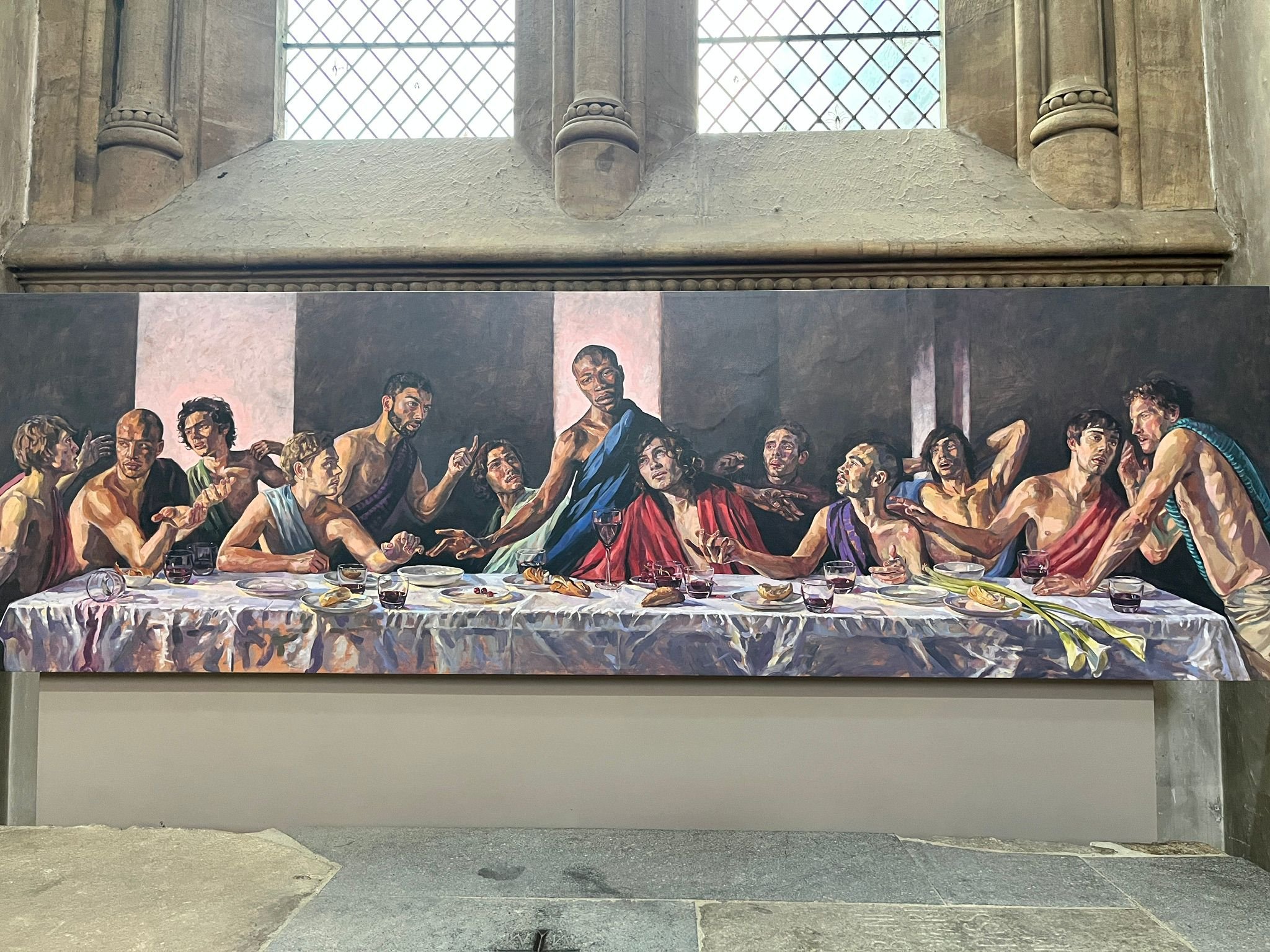
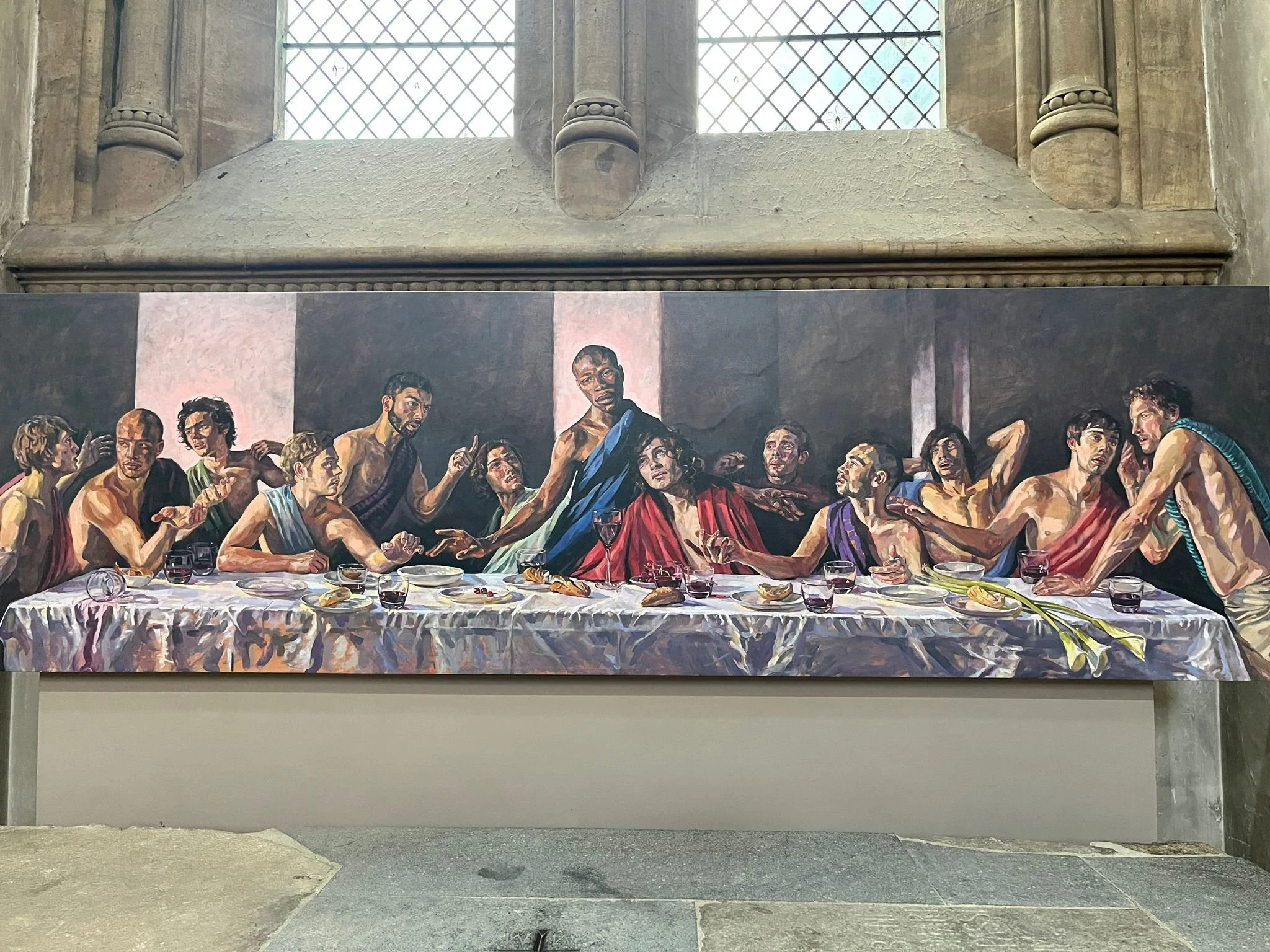
A Last Supper, by Lorna May Wadsworth at St .Albans Cathedral
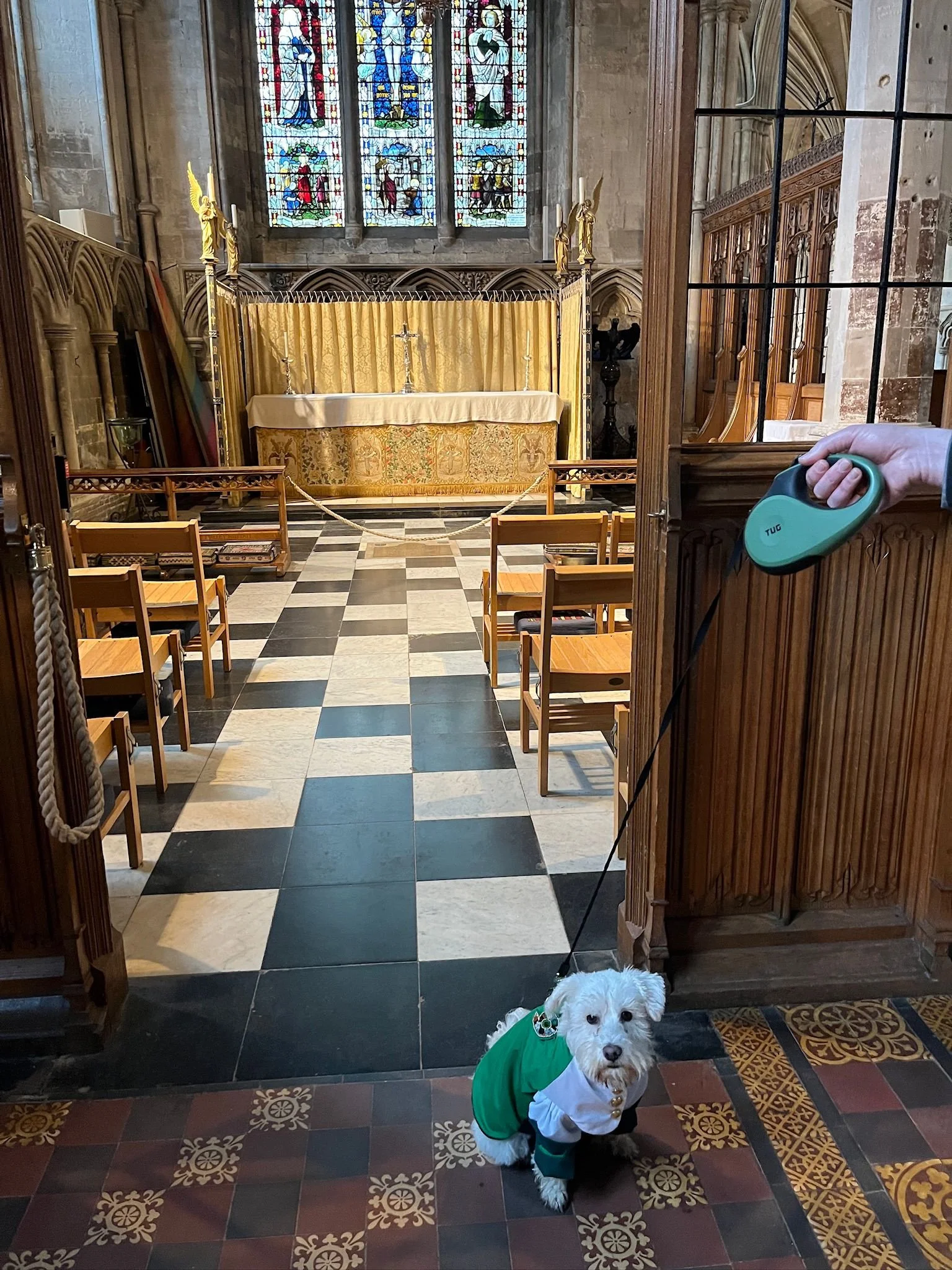
In case you missed it, I recently started a new series here, called A Pilgrimage of Paws that is designed to help showcase ways you can engage with heritage sites even when your four legged friend is in tow. This was all kicked off by a visit to Chichester where I learnt that dogs are allowed in not just that cathedral but many others across the country - a fact that blew my mind. With that discovery, a new feature was born because I figured that if I didn’t know, there are probably lots of other people out there that don’t either and are therefore missing out on the chance to explore sites up and down the country.
So with that, the next stop on our list to visit was St. Albans, where you can travel through almost 2000 years of history in an afternoon. We started off with the Romans, moved to a cathedral which is not only the oldest site of continuous Christian worship in Britain but one which also holds some very modern events, made a quick stop at a site of some 1970s TV heritage, and finished the afternoon watching some football having the best food we’ve had to date at a football ground.
The Romans
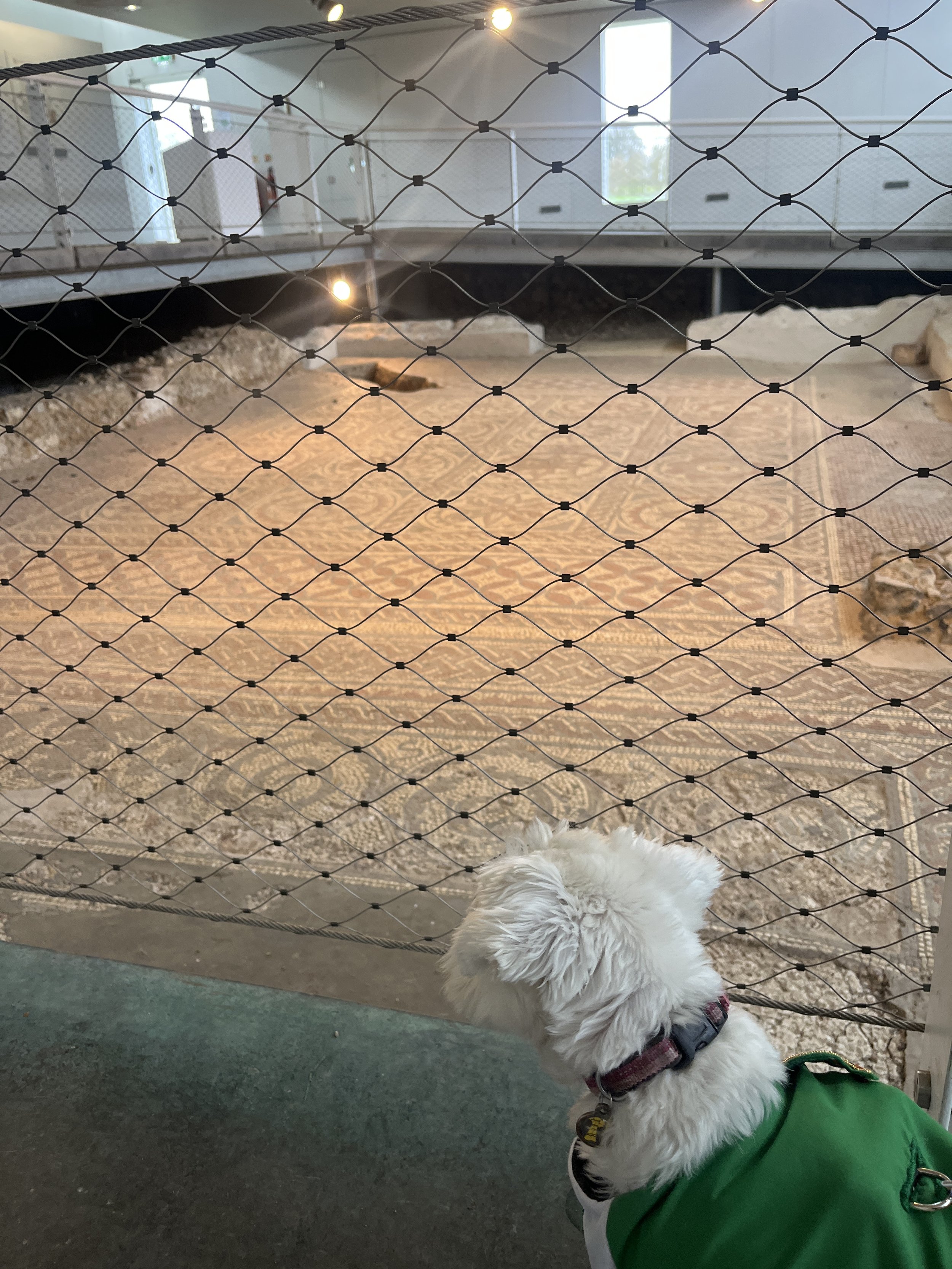
Gazing at the mosaics / a ball left behind by a previous presumably quite sad doggo
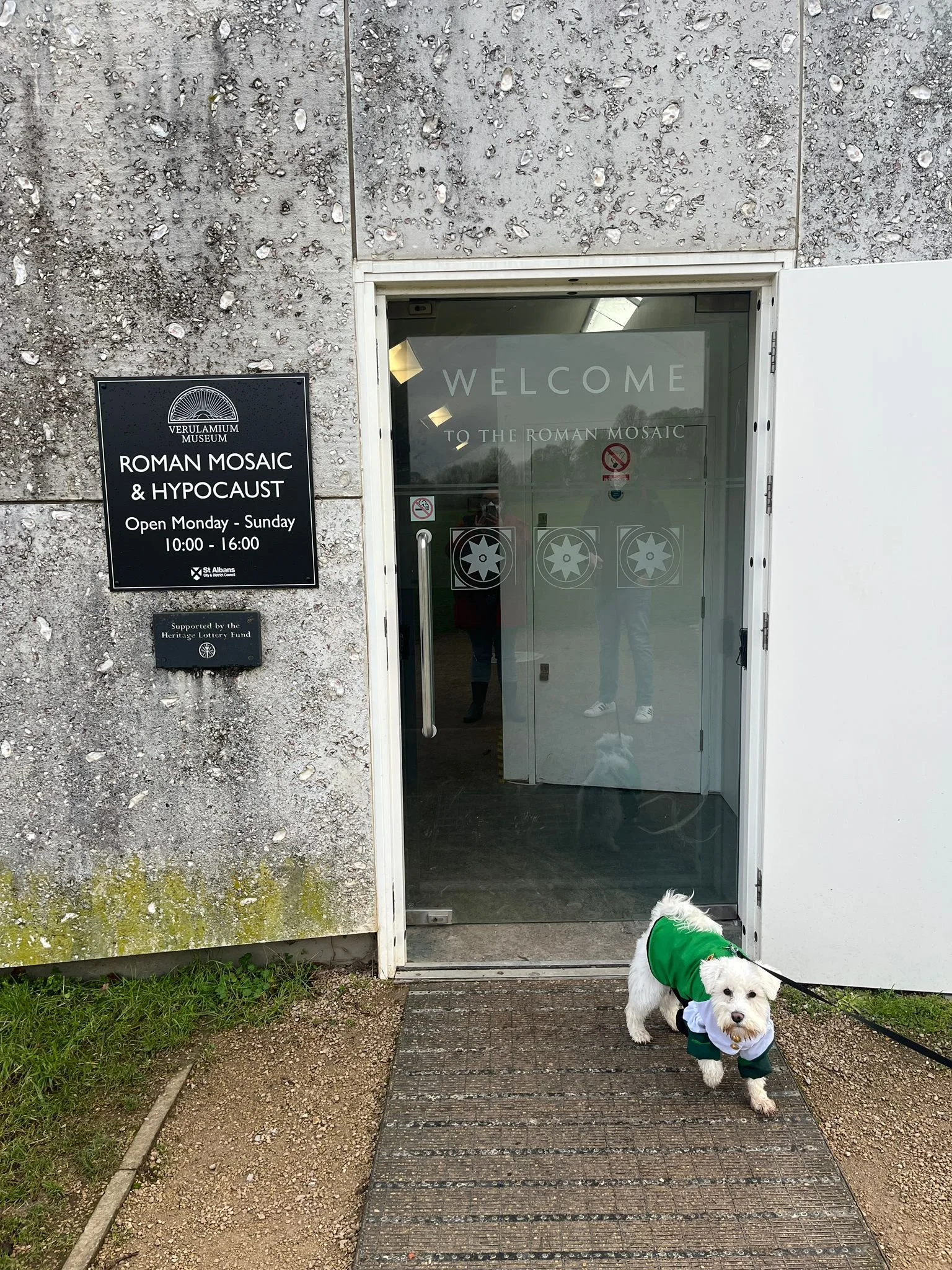
We started off by parking in Verulamium Park where you can find the Verulamium Museum (not dog friendly), the park with the hypocaust, remains of the old London wall and head over the road to the Roman theatre. St Albans is the site of the ancient city of Verulamium, an urban centre that became the third largest town in Roman Britain. As can be seen in just the couple of sites we visited there was a wide array of buildings and facilities in the town supporting both the Roman inhabitants and local Britons. By medieval times the city had been largely abandoned, with inhabitants congregating around the new city that was emerging around the shrine of St Alban. Whilst this meant that many of the building materials were removed from the old Roman buildings and reused elsewhere, it also meant that there was much that could be excavated in the 20thC.
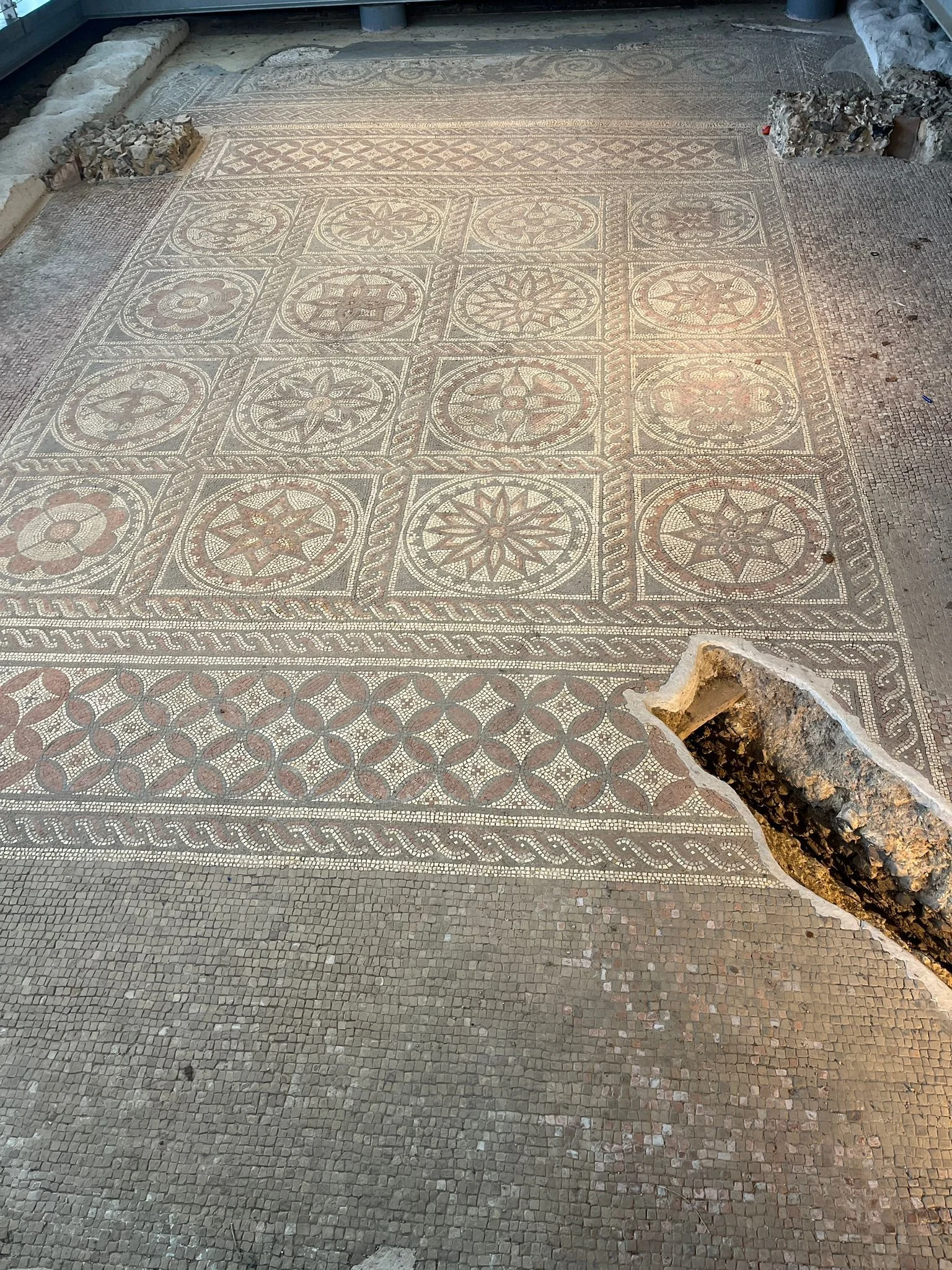
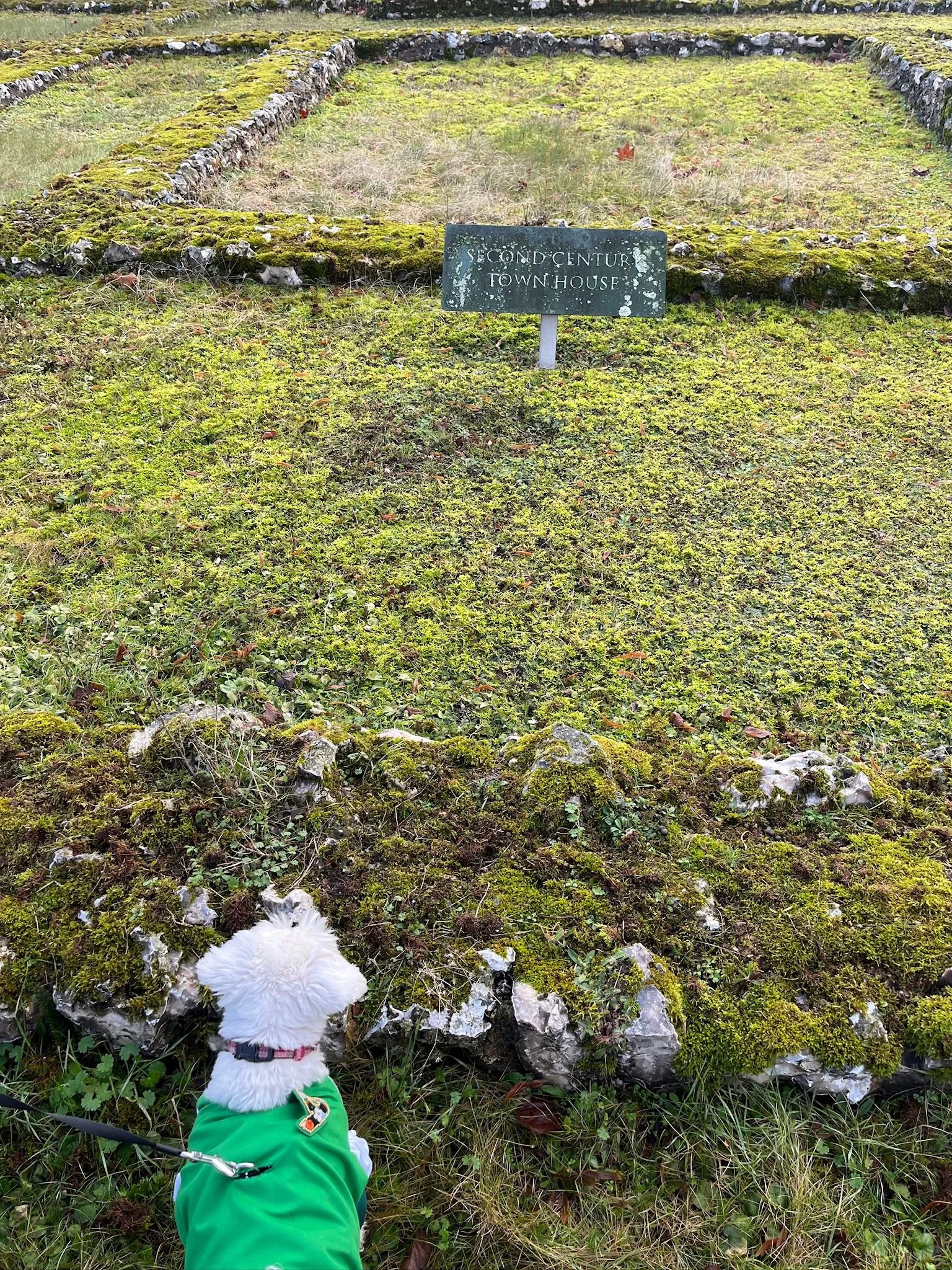
In 1931-1932 a key excavation took place in the park, and led to the discovery of the Roman town house you can visit in the park - look for the big white building you can see from the car park in the middle of the park. In the building, you can see the preserved mosaic floor (approx 180AD) of one of the rooms of this town house which originally would have had around 30 rooms across two storeys. The floor contains around 220,000 tesserae cut from natural stone and arranged to form geometric patterns with a flower design, laid out on a lime mortar on a concrete foundation.
Underneath the floor, and in several other rooms of the house, was the hypocaust - a form of snazzy underfloor heating kept warm by a constantly stoked fire in a small room just outside with the heat moving under the floor and up through concealed vertical flues in the corners of the room which took heating up through the walls.
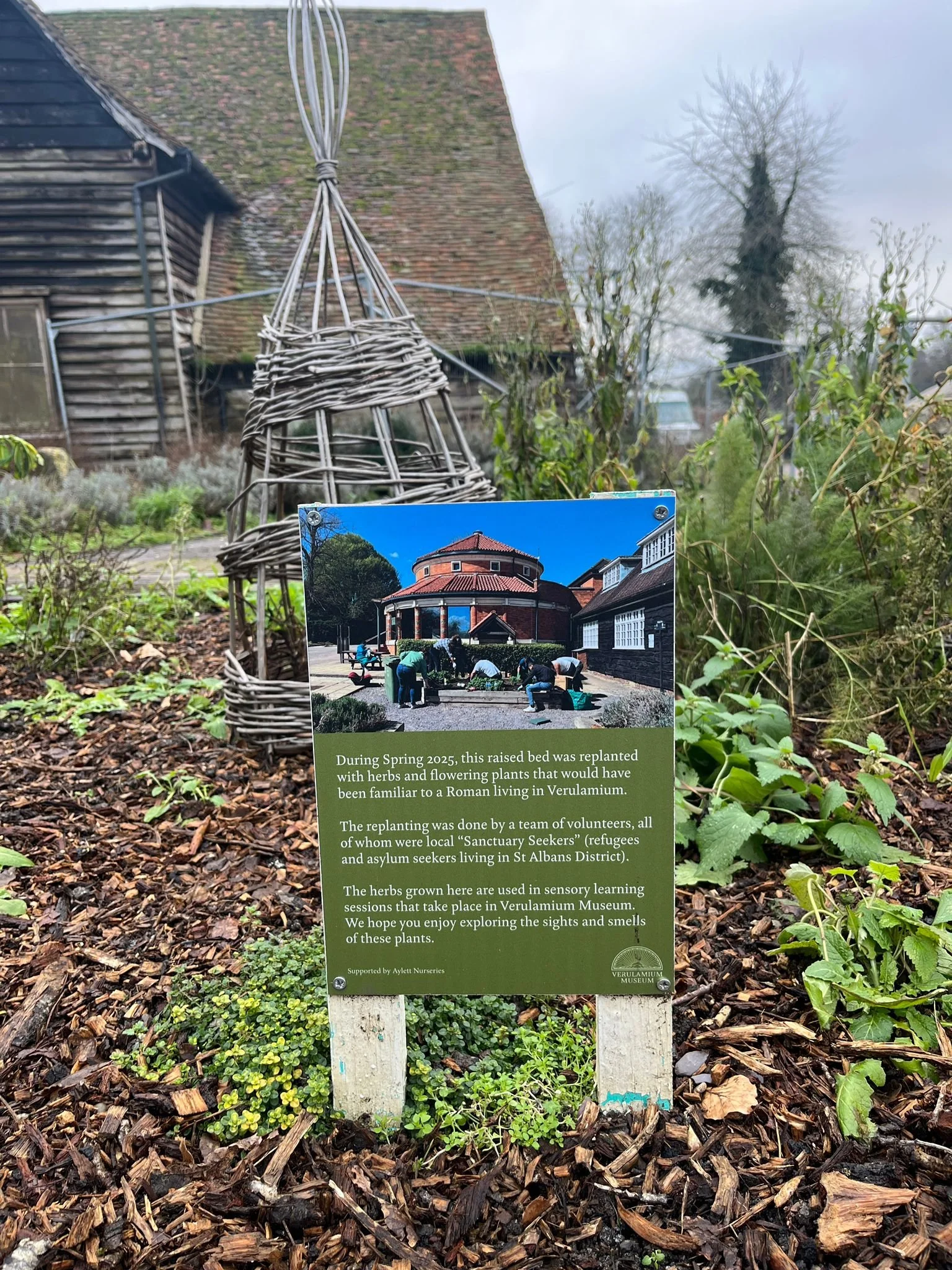
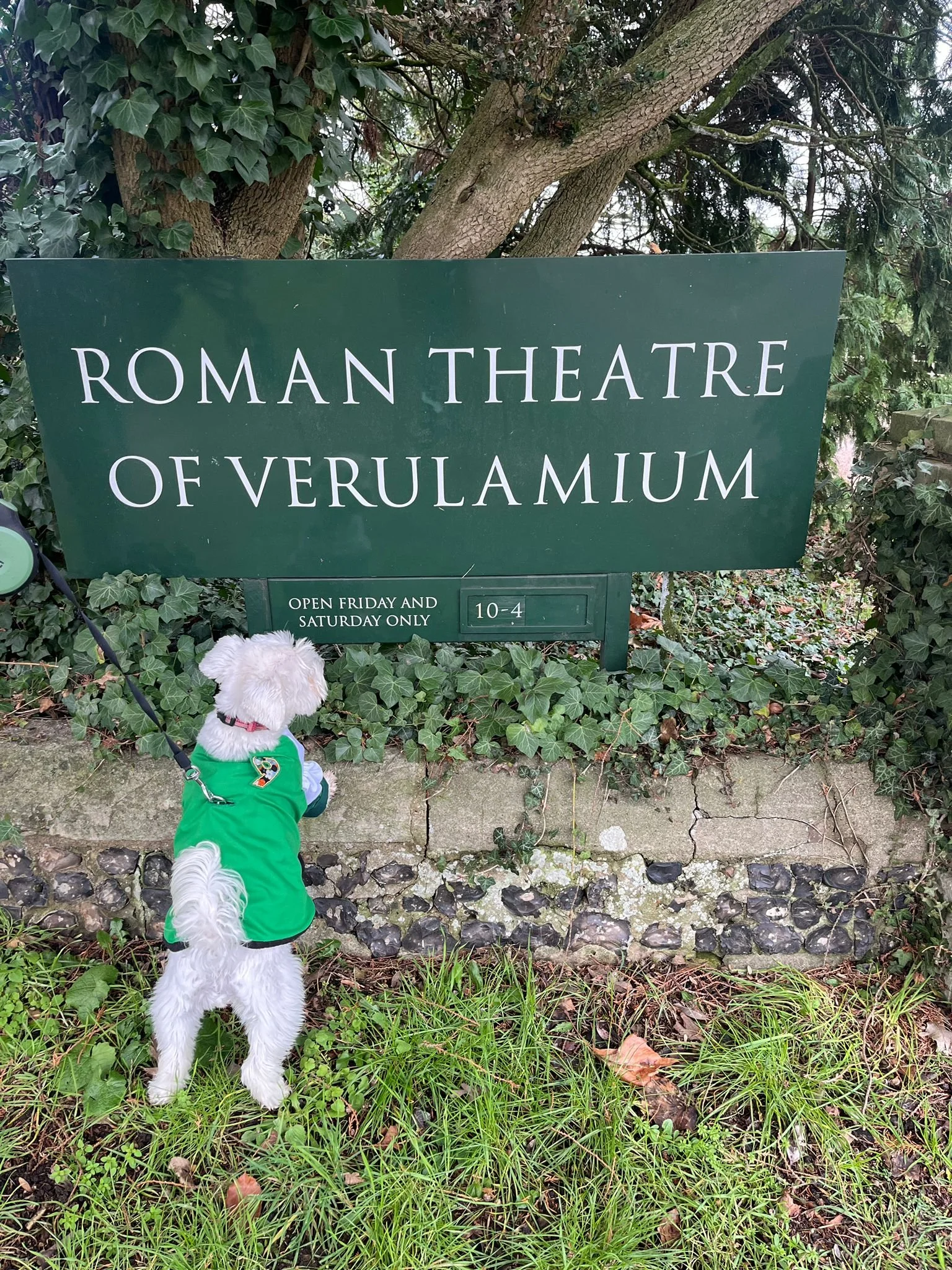
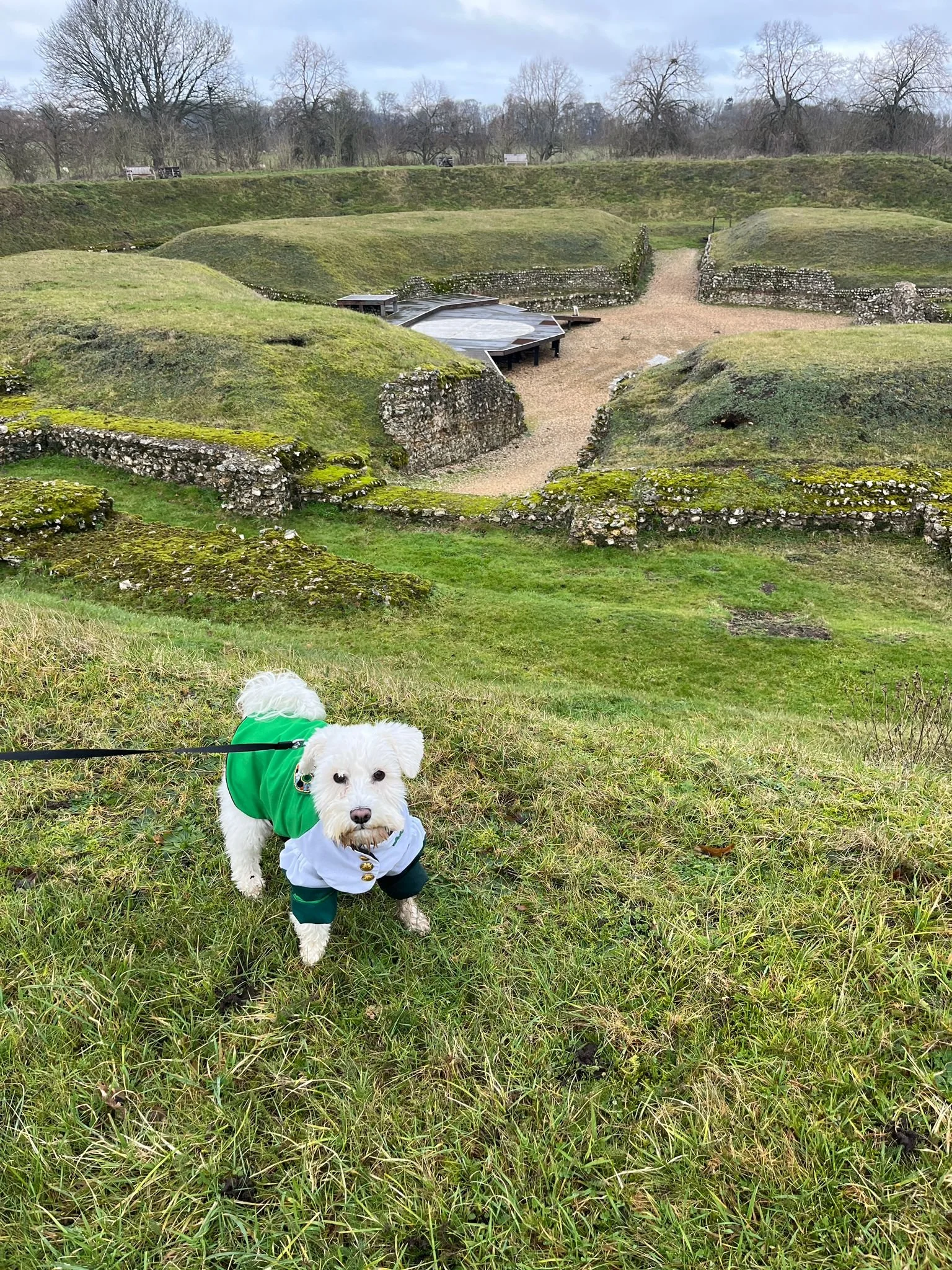
After leaving here, head back to the car park and check out the newly planted garden inspired by the plants that would have been familiar to the Roman inhabitants of the tow, before heading towards St. Michaels Church, and going across the main road to the Roman Theatre (open on Friday and Saturday). When the Romans invaded the local Celtric tribe, the Catuvellauni believed the marshes, rivers, and springs were sacred, and so when laying out the new city the Romans left an open area for the performance of ceremonies. However, these small attempts to appease the locals wasn’t enough, in AD 60 Queen Boudicca led the tribes of Norfolk and Suffolk across the country, and burned Verulamium (among others) to the ground in her attempt to fight off the Romans. However, she was defeated and the city was eventually rebuilt and a large temple (AD170-180), and theatre (AD140) were built close to the earlier shrine.
As with the town house, it wasn’t until more recent times that these buildings were rediscovered, with the theatre found in 1869 and excavated in 1935. In more recent year’s it has once again started to put on plays, and is believed to be the oldest theatre in the country that is still producing theatre today, hosting the annual Roman Theatre Open Air Festival. In Roman times, an audience of around thousands townspeople would have been seated around the edge on raised wooden benches in a semicircular auditorium - much like theatres now - watching a range of events from pantomines to religious processions, dancing and wrestling, armed combat and wild beast shows. The site is the only example of its kind in Britain, being a theatre with a stage rather than an Amphitheatre.
Subsequent excavations at the site uncovered a row of shop foundations, a Roman Villa and a secret shrine, all thought to date from the First Century. The shops had the store front, alongside a rear storage space or sleeping quarters and a covered walkway along the edge of the street for customers and goods. Excavations in the 1950s and 60s showed that the the shops here were largely occupied by blacksmiths and bronze workers - you can imagine the noise!

The Cathedral
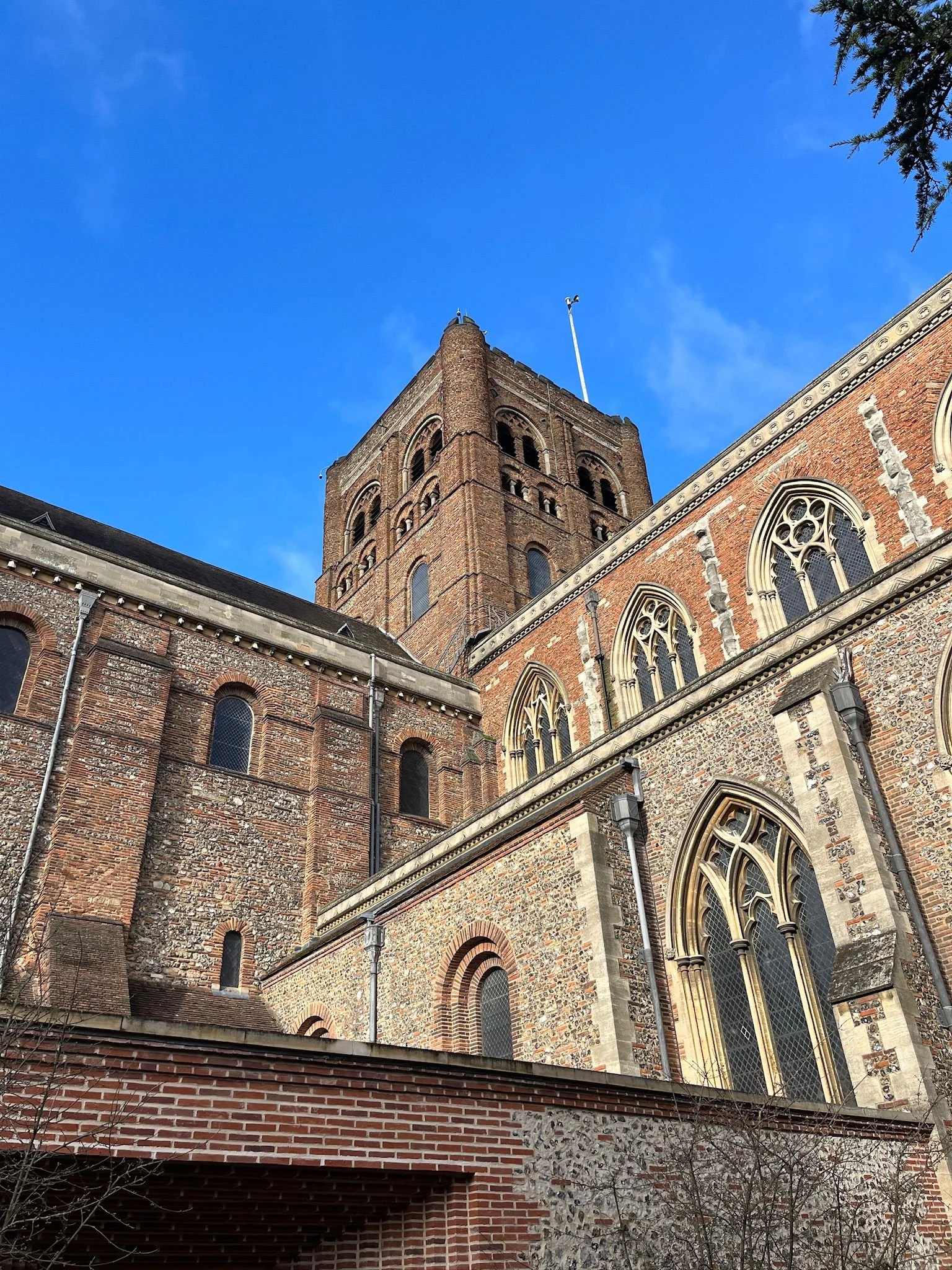
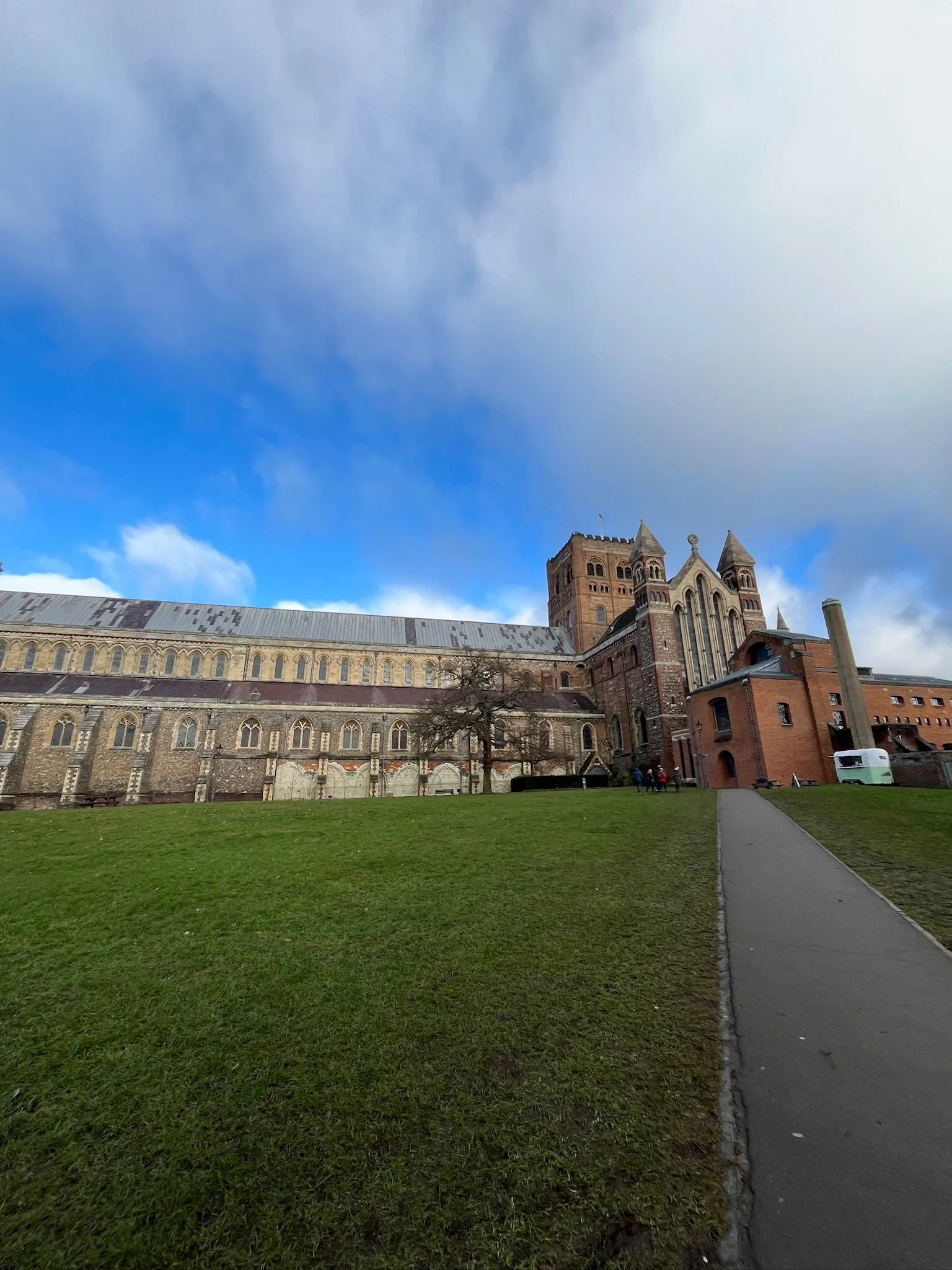
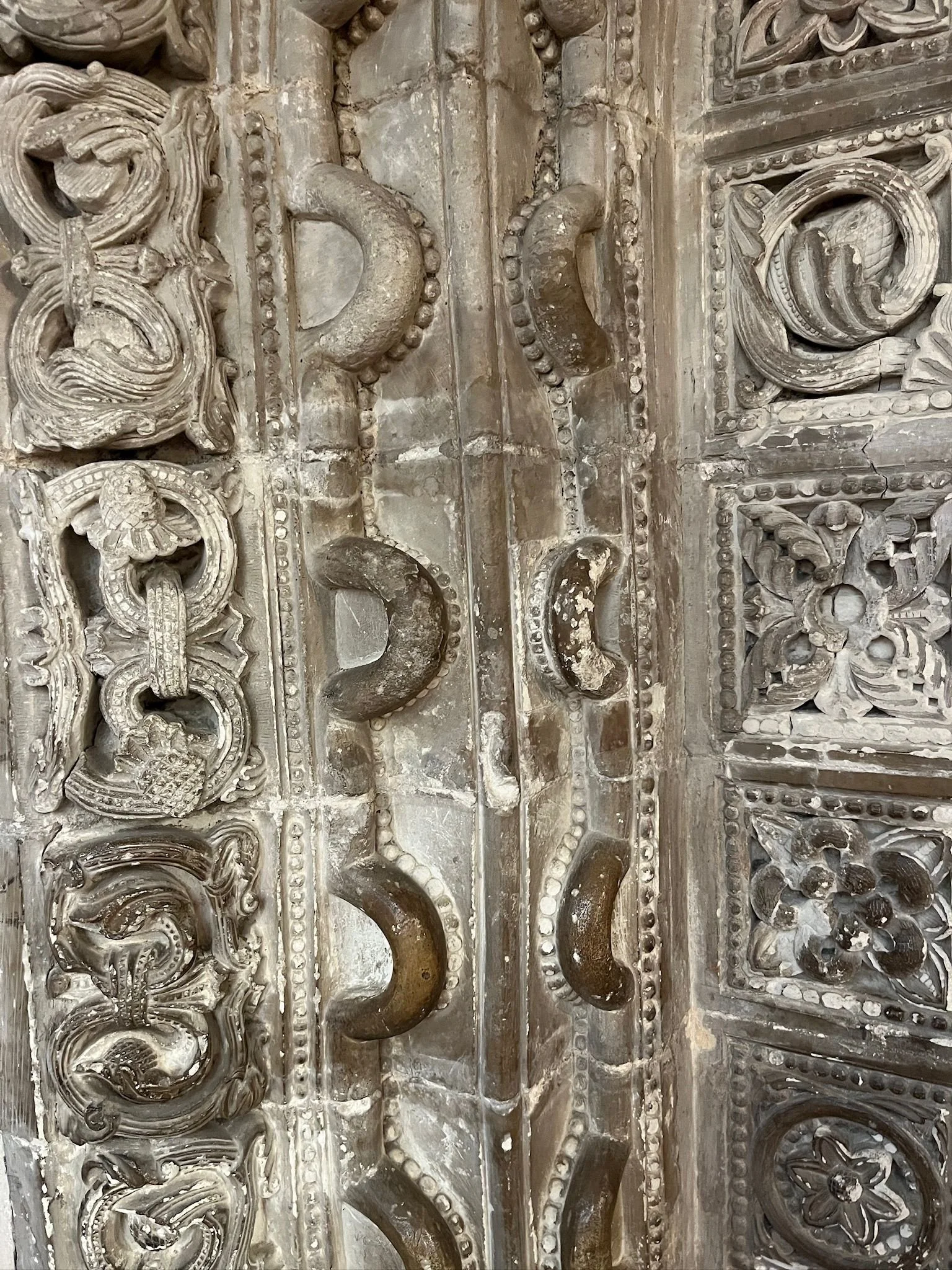
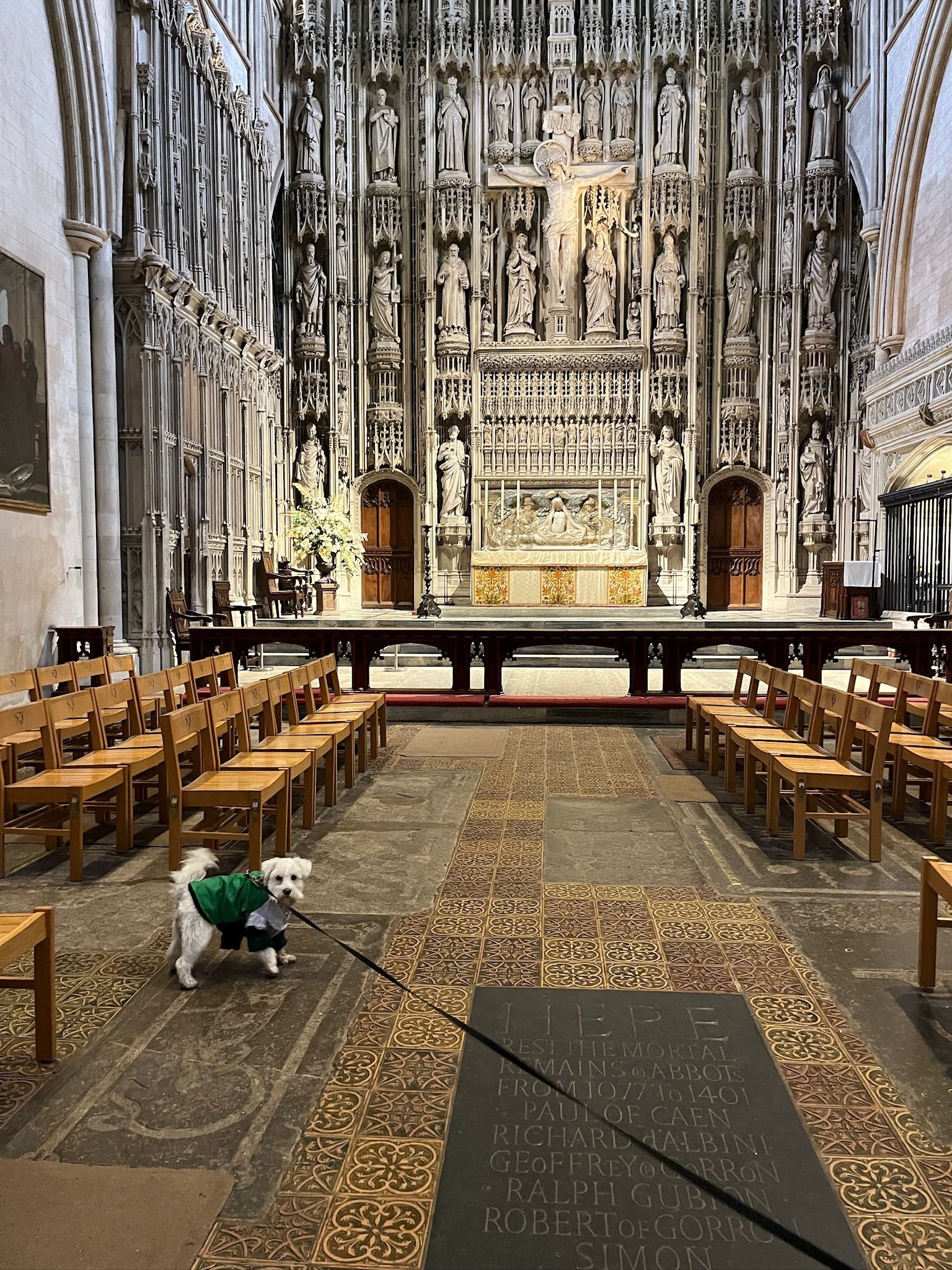
We left the Romans behind and walked back through the park via the ruins of the London Wall and round the slightly flooded lake, and up the hill to the Cathedral, though even here it’s not entirely possible to leave the Romans as parts of the building are made from scavenged parts of the old Roman city. Before the Cathedral was built there were even older churches built around the shrine of St Alban, but after the Norman invasion a new church was commissioned leading to the Tower, which still stands today and is where you’ll find bricks and tiles from the Roman Verulamium.
In 1539 with the dissolution of the monasteries St Alban’s Abbey was closed, shrines were demolished and relics stolen with the Abbey falling into disrepair as locals tried to keep the building going for three hundred years, until wealthy Victorian benefactors paid for repairs with the church ultimately becoming a cathedral in 1877.
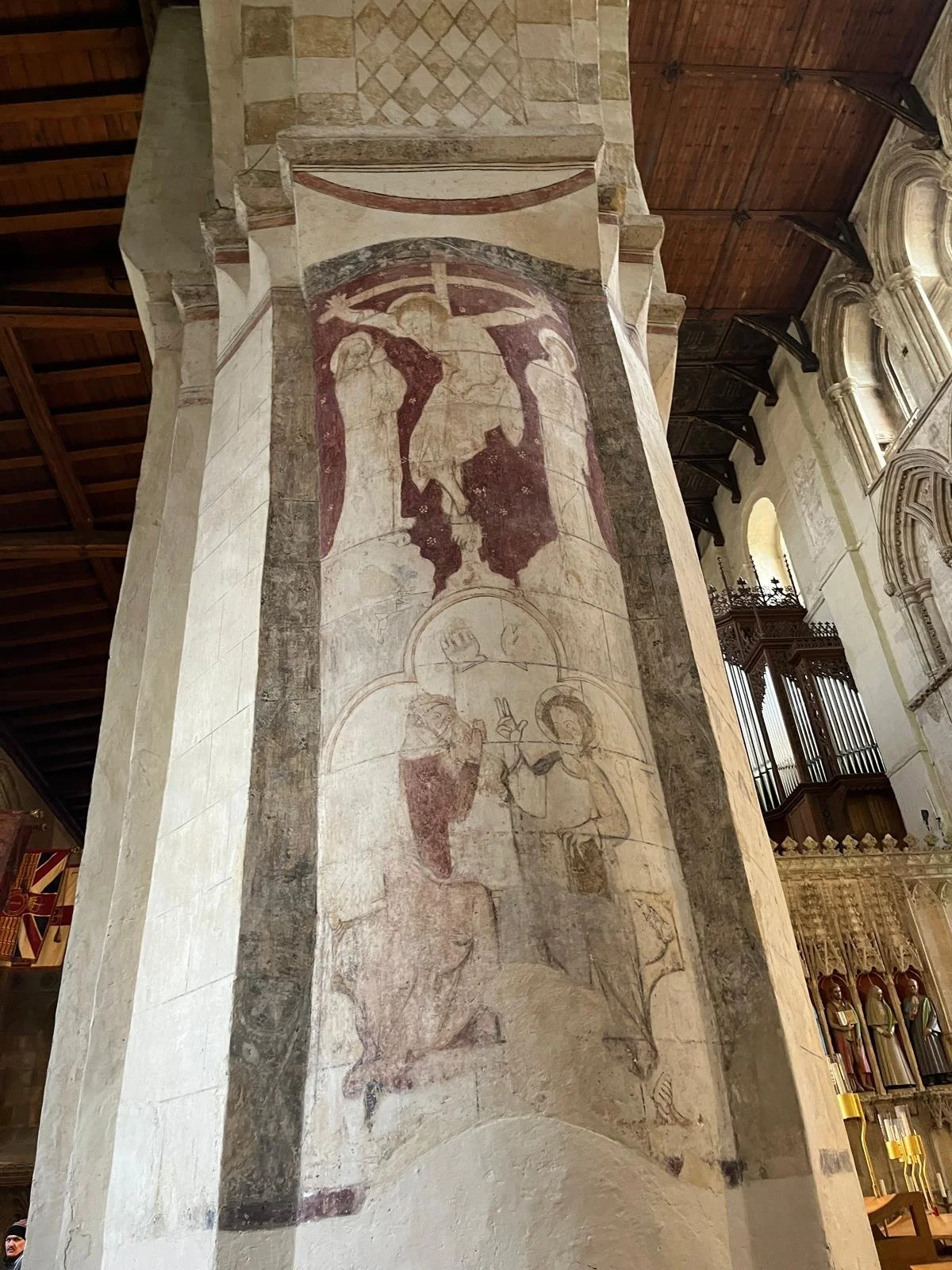
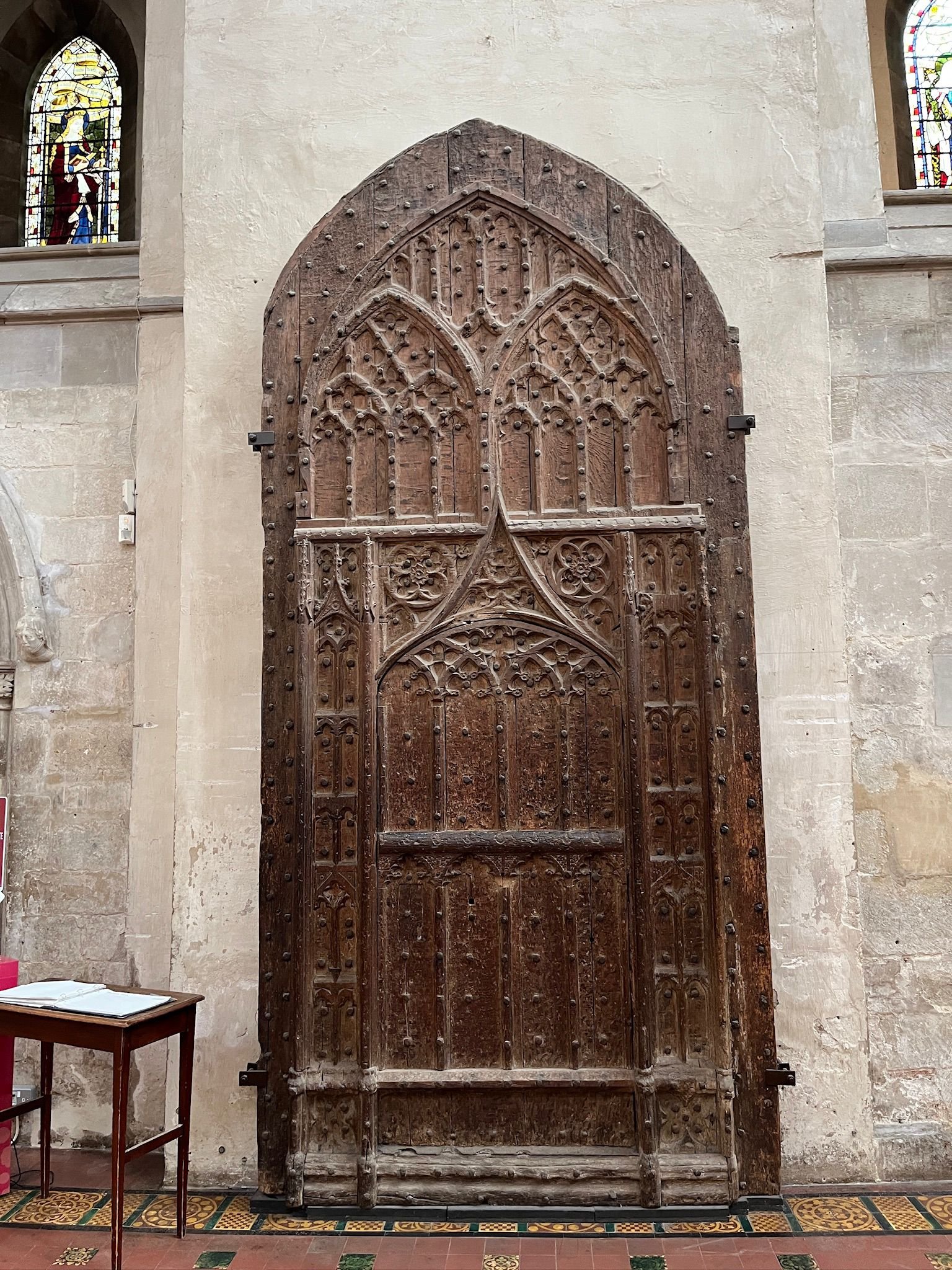
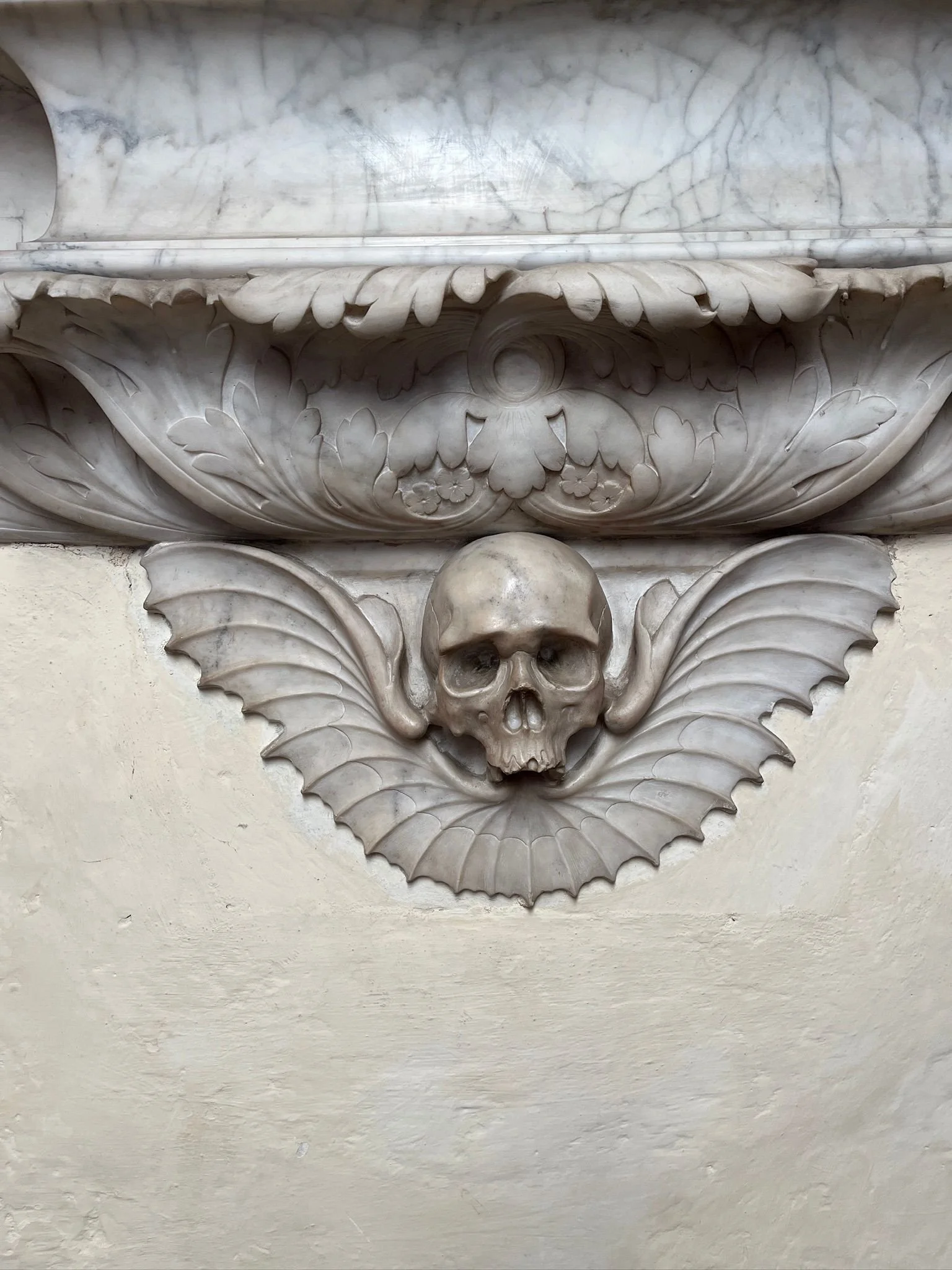
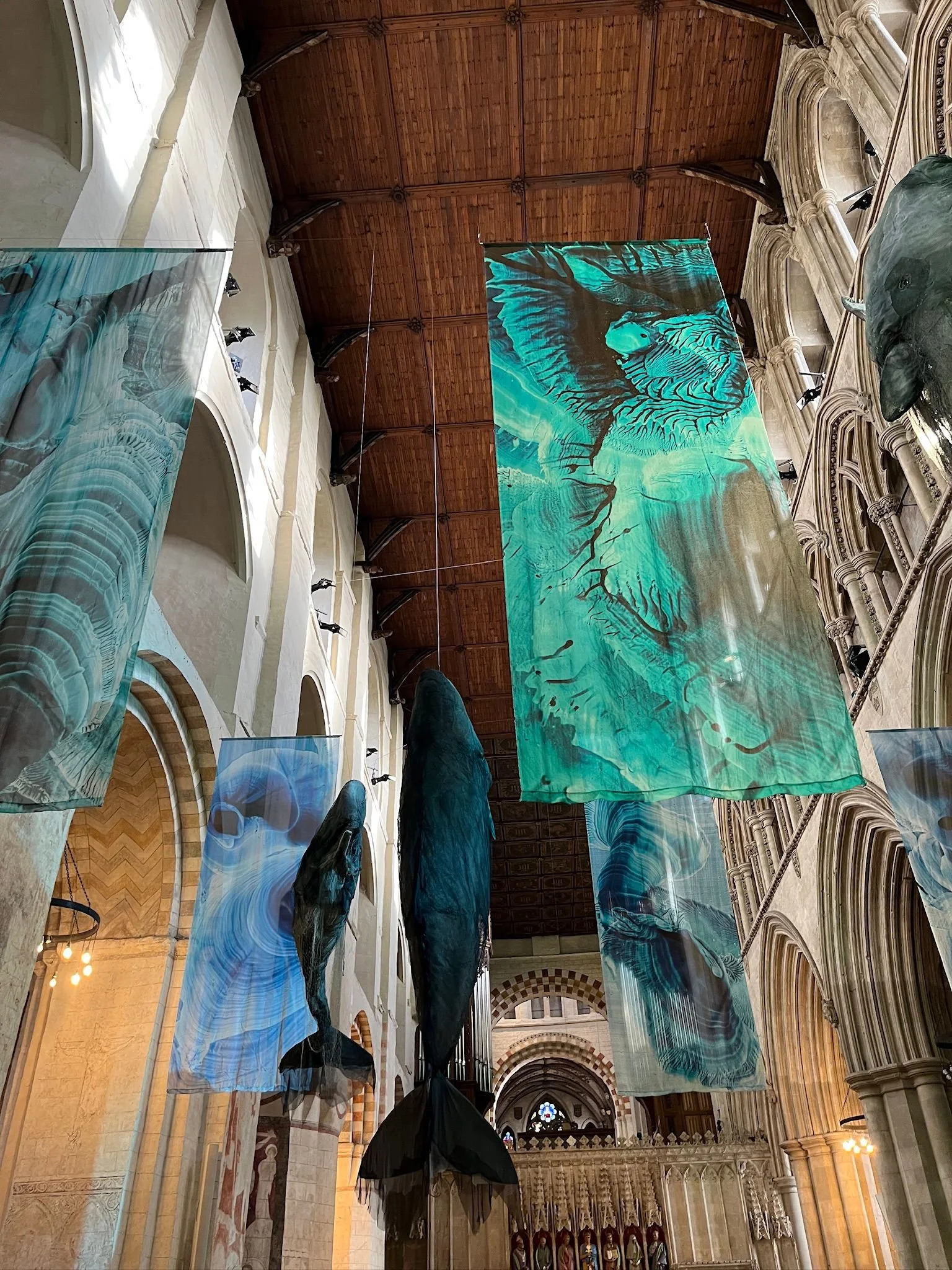
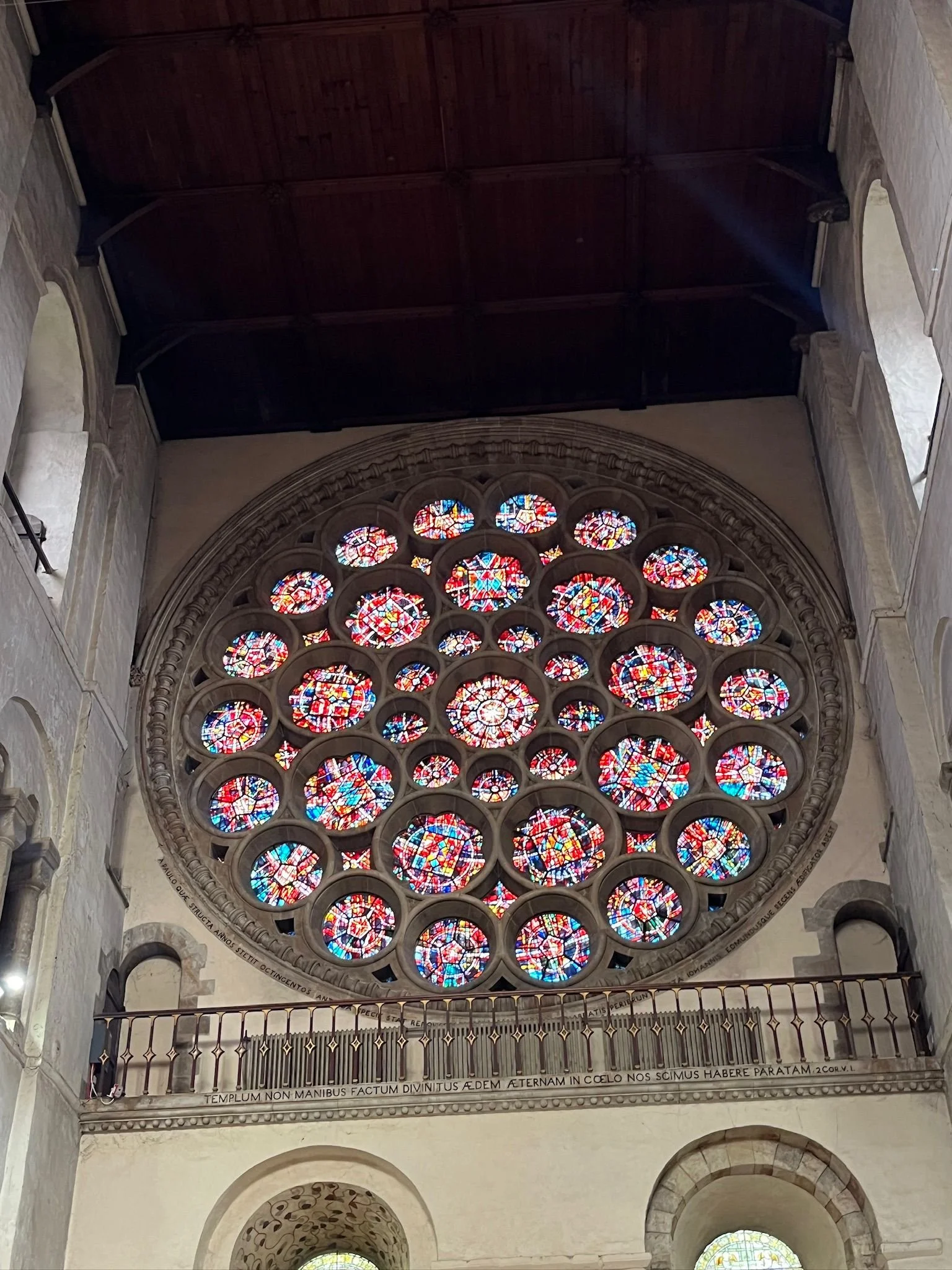
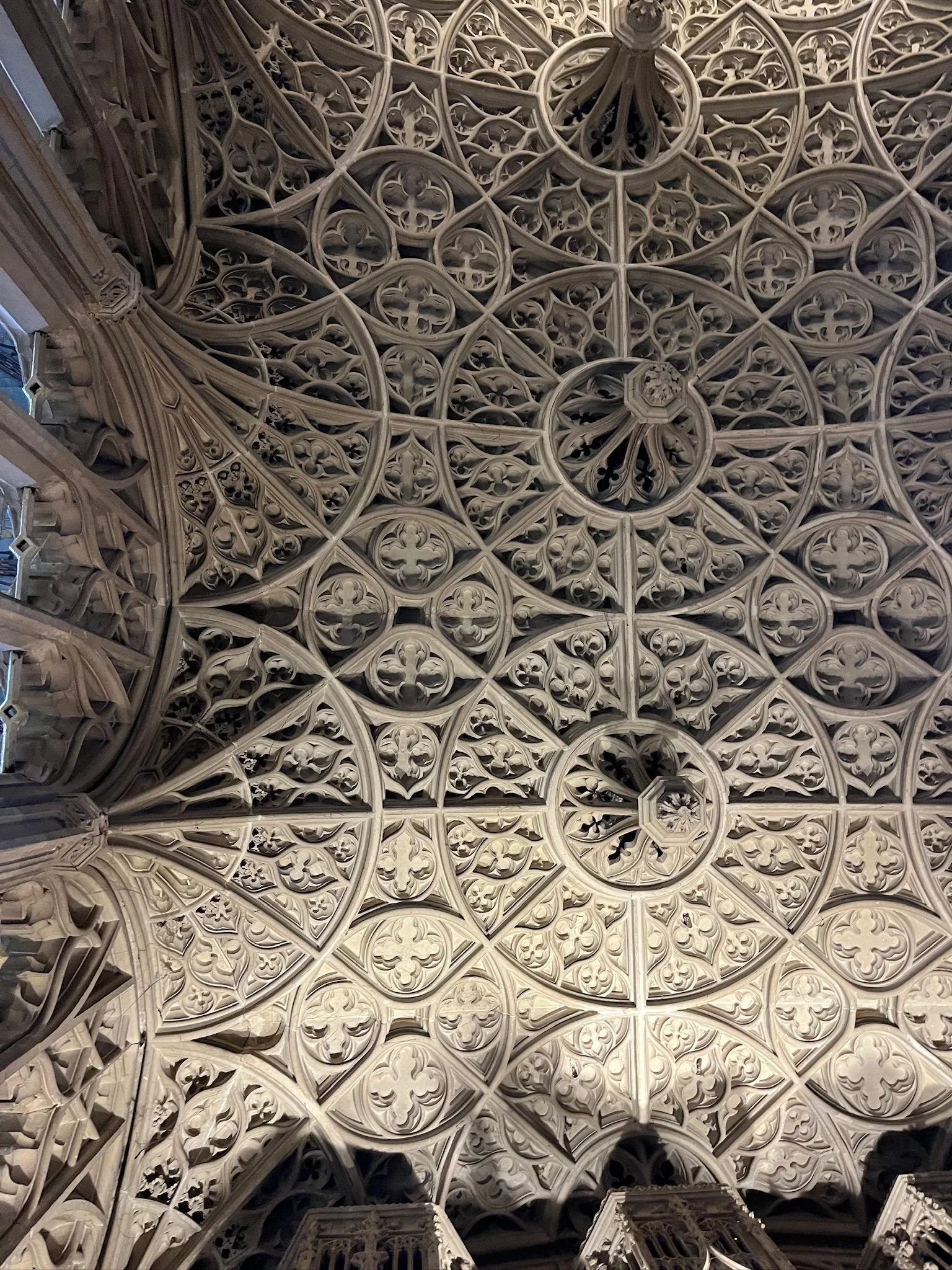
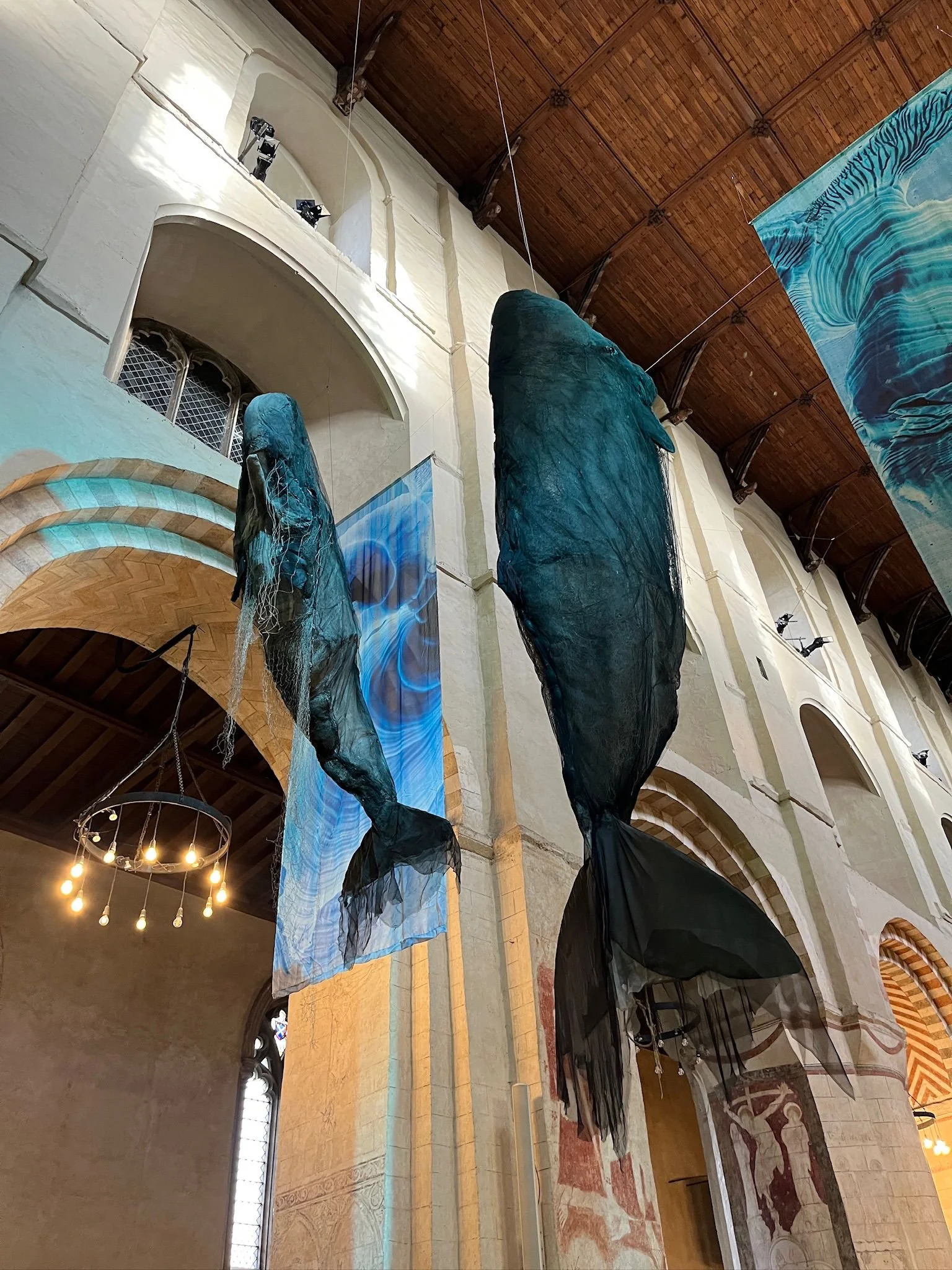
Today the cathedral has a range of art - something I always look for in churches - from medieval wall paintings from the 1200’s, up to brand new installations made of environmentally conscious materials, as seen in their current whale exhibit which has a range of connected activites available for children throughout the cathedral as well as special events that are being put on - I’m very jealous that I don’t live near enough to go to the yoga or soundbath with the whales events.
Modern Heritage
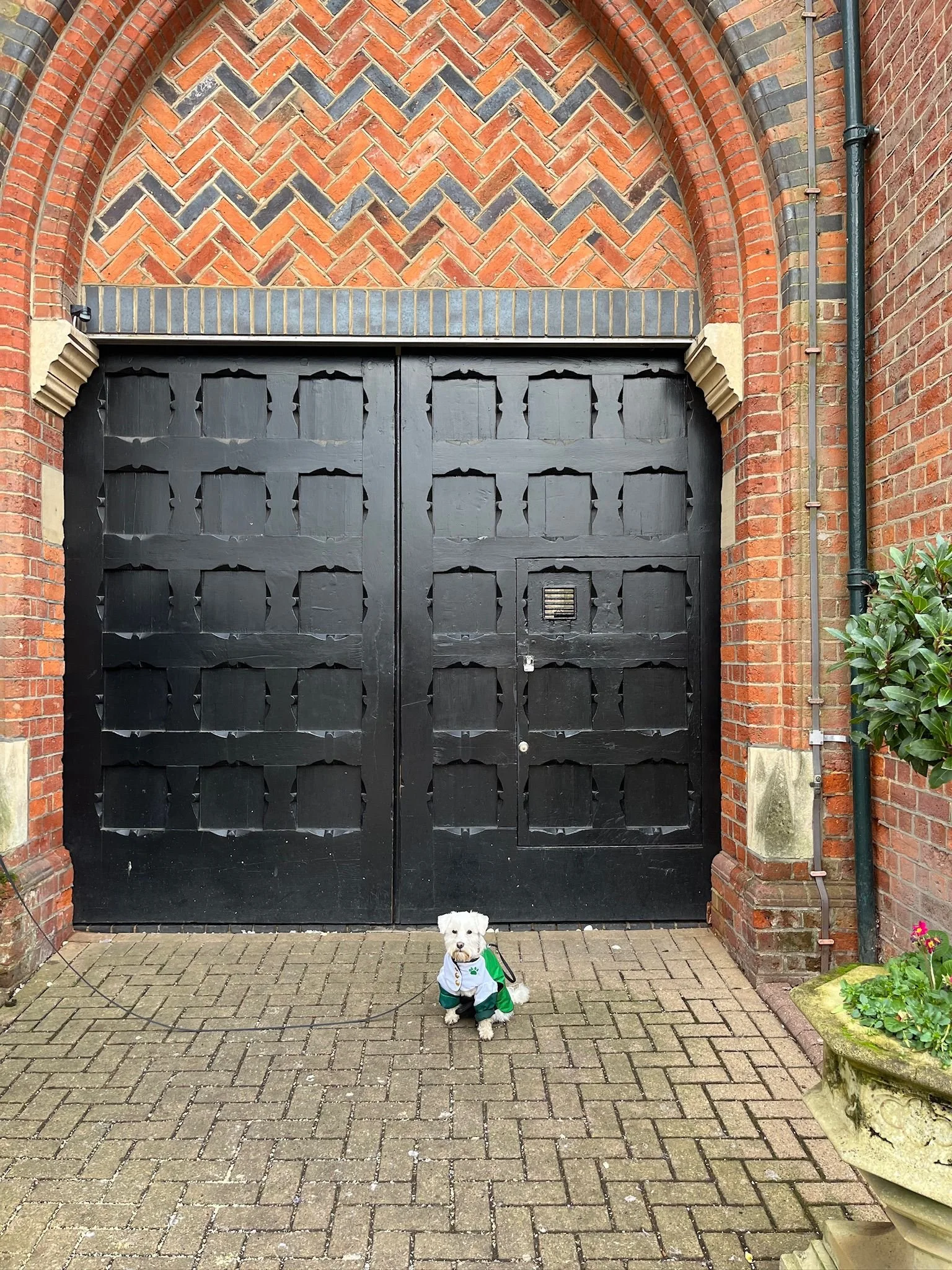
Now, I don’t know exactly how everyone else defines heritage, but I’m choosing to take quite a wide view of what counts as ‘heritage’, and that includes sites that are much more modern than the Romans and ancient churches. Those of us of a certain age will remember Fletch hanging out in prison in that British TV classic - Porridge, and while I haven’t rewatched it in many years, so I’ve no idea how it stands up now, I was still pretty excited to learn that the front door to the prison is in St. Albans between the train station and our next stop - St. Albans City FC so we had to pay it a visit.
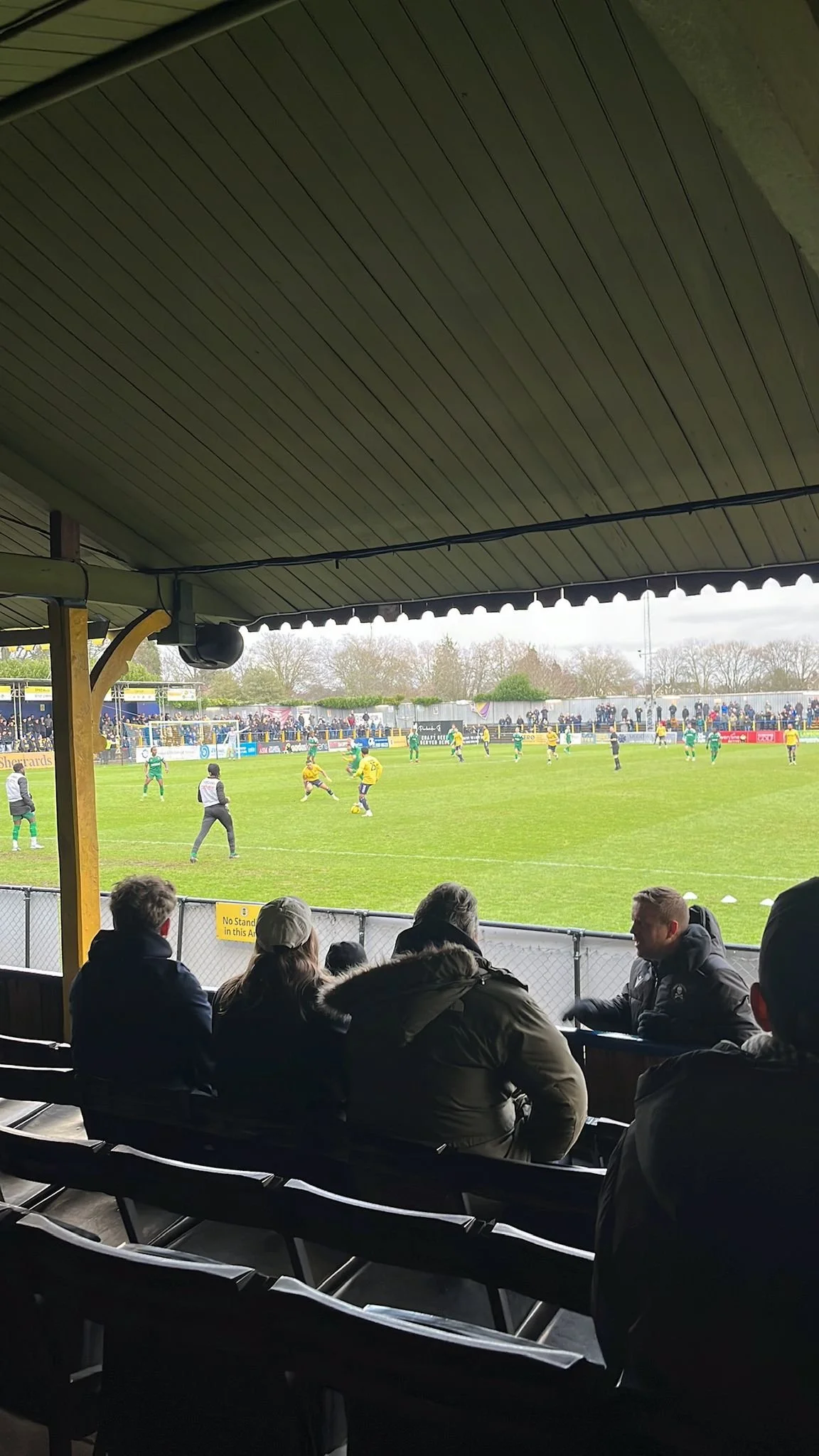
We then made our way to St. Albans City FC to watch them take on Cray Valley (PM) FC. The team was (re)founded 1908, though the Saints can trace their side back to 1881. They’ve played at their ground, Clarence Park for the entirety of the time which in my view is pretty special. There are rumours, however, that the team may be leaving the ground so if you’d like to visit this site with your pooch I’d recommend going sooner rather than later. The locals were friendly, and the food from Chicken George was spectacular - the best food I’ve had at a football ground so far.

Overall, would I recommend a visit to St. Albans heritage sites with a dog? Absolutely! The park and the heritage sites within was free and a great place to walk the dog; the theatre cost (I think) £3 per adult (dogs stay on lead); the staff in the cathedral were friendly though because we were there on a Saturday afternoon it was very busy lots of families with young children. I’m not sure if that’s a normal scenario or was a reflection of all the kid-friendly whale-related activities, but if your dog isn’t a fan of crowds/kids it’s worth bearing in mind when you time the visit. In terms of cost for the cathedral, it’s a donation system and you can pay what you like, and there’s a shop with the usual types of items.
Where next?
I’m not sure where the next Pilgrimage of Paws will take us - but I’m certainly keen to hear ideas for places that should feature in the series.
If you enjoyed today’s blog, or other content you’ve read on my site please consider dropping me a tip on ko.fi - this will help keep me in books, keep me able to travel to sites I can write about, and just keep this site running.
